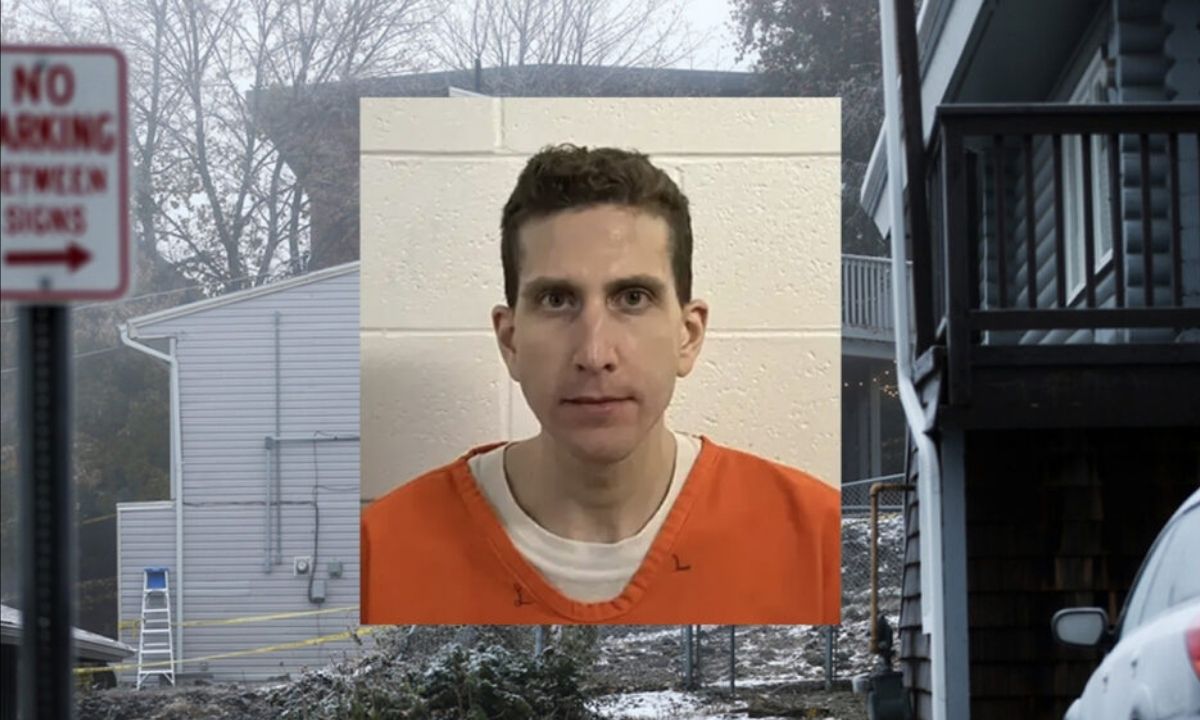
Convicted quadruple murderer Bryan Kohberger has secured a taxpayer-funded attorney to pursue his bid to withdraw the guilty pleas that spared him from a possible death sentence, one year after he admitted in open court that he killed four University of Idaho students.
Ada County District Judge Steven Hippler granted Kohberger’s request on July 29 and directed the Idaho State Public Defender to appoint an attorney for all post-conviction proceedings. The order came two days after Kohberger prepared and filed his own handwritten petition from the Idaho Maximum Security Institution.
As previously reported by The Dallas Express, Kohberger received four consecutive life sentences without parole on July 23, 2025, plus 10 years for burglary. He pleaded guilty on July 2, 2025, to killing Madison Mogen, Kaylee Goncalves, Xana Kernodle and Ethan Chapin inside an off-campus home in Moscow, Idaho, on November 13, 2022.
Kohberger claims lawyers induced false plea
Kohberger’s petition accuses former defense attorneys Anne Taylor, Elisa Massoth and Bicka Barlow of ineffective assistance. He alleges they used “coercion, disinformation, false promises and withholding of exculpatory discovery” to convince him to falsely confess.
The filing claims the attorneys failed to tell him about what he called “clumps of unknown hair found in Ethan Chapin’s hands.” It also alleges they told him actual guilt did not matter when considering the plea and misrepresented the conditions he would face on Idaho’s death row and under a life sentence.
Kohberger separately declared his innocence in a statement provided to The New York Times and followed with a phone call from prison.
“My actual innocence is my truth, and the plea, hinged on by false promises and blatant disinformation, MUST be withdrawn,” Kohberger said. He declined to discuss the evidence or other details supporting his claim.
Taylor had not publicly responded to Kohberger’s new accusations as of publication.
Prior sworn answers undercut new claims
Kohberger’s filing directly conflicts with his answers during the 2025 plea hearing. He told Hippler that he entered the agreement knowingly, voluntarily and intelligently, denied that anyone had coerced him or made promises beyond the written agreement, and answered “yes” when asked whether he was pleading guilty because he was actually guilty.
His agreement waived a direct appeal, but Idaho law still permits a court to set aside a conviction after sentencing to correct a “manifest injustice.” Idaho Criminal Rule 33(c) sets that standard. The appointment of counsel allows Kohberger to litigate his claims; it does not mean the court has found them credible or meritorious.
The family of victim Kaylee Goncalves said Kohberger received the outcome he sought when prosecutors removed the death penalty.
“Instead, BK received exactly what he asked for: a deal that spared his life,” the family said. “Know this—he hates that life.”
Hair evidence draws dispute
Brent Turvey, a forensic scientist formerly retained by Kohberger’s defense, said crime-scene photographs showed a cluster of hairs on the bloodied bed frame beneath Chapin’s hand. Turvey said the FBI physically examined the hairs, excluded Kohberger as their source and did not conduct DNA testing, Fox News reported.
“This is not his hair,” Turvey said, arguing that Kohberger’s allegations should receive court scrutiny.
Separate court records complicate Kohberger’s description of hair found in Chapin’s hands. A defense-retained expert examined one hair recovered from the evidence bag containing material from Chapin’s right hand and found it morphologically consistent with Chapin’s own hair.
It remains unclear whether Kohberger’s petition refers to that hair or the cluster Turvey described on the bed frame.
Shanon Gray, an attorney for the Goncalves family, said the defense already knew about the hair evidence and disputed Kohberger’s characterization of it as exculpatory.
“The other glaring issue is that all that proves is that there could’ve been another person, not that he wasn’t present,” Gray said.
Netflix series follows filing
Netflix released the three-part documentary series The Idaho Murders: College Nightmare on July 29. The series uses police footage, archival material and interviews with victims’ relatives to revisit the killings and investigation. Kohberger filed his petition two days before the documentary’s release, and no evidence establishes that the series prompted his legal action.
Provided by Dallas Express