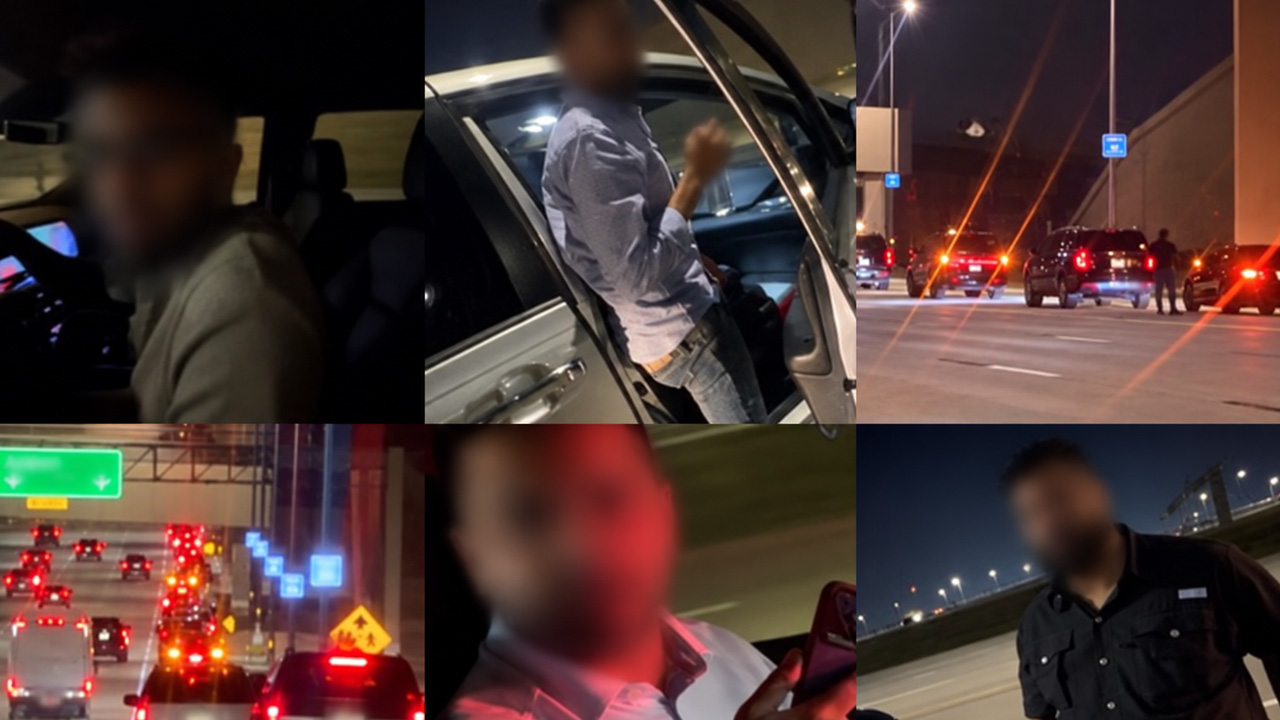
The Dallas Express is investigating why dozens of rideshare drivers are lining the shoulder of a roadway near DFW International Airport amid complaints that Uber’s airport queue is not sending ride requests to drivers waiting in designated staging areas and allegations that some drivers may be receiving airport trips outside the normal queue.
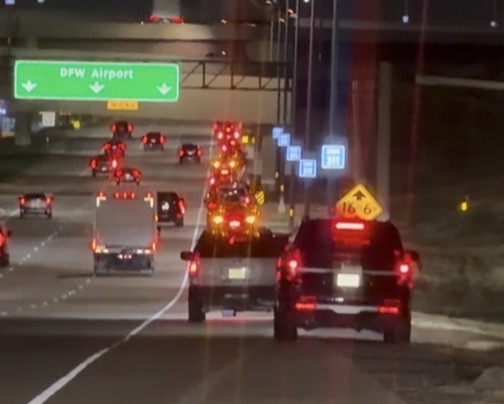
The investigation began after an anonymous veteran Uber driver provided DX with video showing a long line of vehicles, primarily black SUVs, stopped along the shoulder near the airport.
The driver, whose identity DX is withholding because he fears retaliation affecting his rideshare income, previously assisted The Dallas Express with its investigation into alleged rideshare queue manipulation at DFW Airport.
As previously reported by The Dallas Express, the driver previously entered a designated DFW rideshare staging area and reported receiving no airport rides for more than 45 minutes despite Uber displaying an estimated wait of zero to 15 minutes. DX subsequently documented drivers using multiple electronic devices and examined allegations involving account sharing and GPS manipulation.
DFW Airport Police later publicly confirmed during an August 12 Texas Senate hearing that the department was investigating alleged rideshare fraud connected to the earlier allegations. As DX later reported, police said their early findings pointed to an isolated incident. DX has not confirmed the current status of that police investigation.
The same veteran driver recently went to the roadway shoulder area after reporting that he received no rides while waiting in the designated airport queue. He alleges that some drivers could be circumventing the normal queue or engaging in rideshare fraud.
DX has not independently established that the roadside drivers are manipulating Uber’s system or committing fraud.
Drivers explain the roadside line
During a visit to the location, DX observed dozens of vehicles stopped along the shoulder and interviewed multiple drivers about why they were there. Some drivers DX approached did not speak English.
Several identified themselves as Uber drivers. Drivers who discussed their backgrounds included men who said they were originally from Sudan and Ethiopia. Other individuals declined to discuss their nationality or immigration status. Several drivers said they were U.S. citizens or lawful residents.
One Sudanese Uber driver said drivers were gathering outside the designated queue because they were not receiving airport requests while waiting inside it.
“Everyone here you see in the line is struggling,” he told DX.
The driver said he had driven for Uber for seven years and claimed drivers could wait inside the normal queue for hours without receiving a request.
“You can sit over there for more than four hours, sometimes eight hours,” he said.
During the interview, a man who had been sitting with the Sudanese driver walked away, entered another vehicle and drove from the area after DX began asking questions.
When asked why the man left, the driver said he did not know.
“That is his business. You have to ask him,” the driver said, adding that the man was his friend and “maybe he doesn’t want to talk to you.”
The man’s departure does not establish wrongdoing.
Another Uber driver told DX that he had been parking along the roadway shoulder for “just a couple of days.”
When DX asked about a work visa and his immigration status, the driver repeatedly declined to discuss the subject.
“I don’t want to talk about that,” he said several times before declining further questions.
When asked why the man left, the driver said he did not know.
“That is his business. You have to ask him,” the driver said, adding that the man was his friend and “maybe he doesn’t want to talk to you.”
The man’s departure does not establish wrongdoing.
Another Uber driver told DX that he had been parking along the freeway shoulder for “just a couple of days.”
When asked whether he was participating in a work visa program, the driver repeatedly declined to discuss his immigration status.
“I don’t want to talk about that,” he said several times before declining further questions.
A driver’s nationality or refusal to discuss immigration status does not establish unlawful presence, lack of work authorization or rideshare fraud.
Other drivers gave varying accounts of how long the roadside staging had been occurring, ranging from several days to nearly a month.
Another driver, who said he had worked for Uber for 12 years, blamed the situation on Uber’s system.
“If I go to the lot, take my line, never get request,” he said.
The driver claimed approximately 400 Black SUV drivers had signed a complaint regarding the issue and sent it to Uber. DX has not independently verified the existence or contents of the complaint.
“If he fix it, if he stop the request from this area, everybody back to the queue,” the driver said. “We want to back to the queue.”
Other drivers offered different explanations. Some said they were waiting for friends or private clients. Two men declined to answer most questions and said they were waiting to pick up a friend.
Uber’s queue rules
Uber’s current DFW driver guidance says drivers can enter a designated waiting area and join a virtual queue for airport trip requests. Uber says proximity to the terminal within the waiting area does not move a driver closer to the front of the queue and that drivers can lose their place if they drive outside the waiting area.
Uber also says that if no drivers are in the waiting area, trip requests can go to nearby drivers based on proximity and other factors. The company’s guidance also describes a Rematch feature that can send a driver a new airport request shortly after completing an airport drop-off without requiring a return to the waiting area.
DX has not established whether any of the roadside drivers observed during the latest visit were receiving Uber airport requests at the time or whether any request fell under those conditions.
Roadside staging raises safety questions
The roadside staging also raises questions under Texas traffic law.
Texas Transportation Code §545.058 allows motorists to use an improved right shoulder to stop, stand or park only when doing so is necessary and can be done safely. Stopping on the left shoulder of a divided, limited-access or controlled-access highway is generally limited to a disabled vehicle, compliance with an official traffic-control device or avoiding a collision. State law separately prohibits parking where official signs prohibit it and allows the Texas Department of Transportation to restrict roadside stopping or parking on highways where it determines the practice is dangerous or would unduly interfere with traffic.
Multiple drivers acknowledged that parking along the roadway presented a safety concern.
One driver said he would prefer to use the designated waiting lot but believed he needed to wait elsewhere to receive rides and make money.
“Nobody like it,” he said.
DX seeks answers
The latest observations add another layer to DX’s continuing investigation into rideshare operations at DFW Airport.
The earlier investigation documented allegations that drivers were manipulating the airport queue through multiple accounts, devices or GPS technology. DX has not established that those practices explain the activity currently observed along the roadway.
The central question is why drivers waiting inside DFW’s designated Uber queue report receiving few or no airport requests while numerous drivers believe waiting along a nearby roadway allows them to receive rides.
The Dallas Express has reached out to Uber, DFW Airport Police, the Grapevine Police Department and the Tarrant County Sheriff’s Office for comment. DX asked whether authorities are aware of vehicles routinely staging along the roadway, whether stopping there is permitted, whether warnings or citations have been issued, and whether officials have received complaints about the activity.
DX also asked Uber whether drivers can receive DFW Airport ride requests while outside the designated queue when other drivers remain inside it, whether the company received the alleged complaint from approximately 400 Black SUV drivers, and whether it has identified technical problems or attempted manipulation involving its DFW Airport queue.
The investigation is ongoing.
Provided by Dallas Express