As plans for long-term missions to the Moon and Mars move forward, scientists are studying a question that once seemed confined to science fiction: Could humans reproduce beyond Earth?
Reproductive biologist Nicole McPherson began considering the issue after her husband asked whether humans could reproduce in space. What initially seemed like a simple question became more complicated as she considered how dependent human reproduction is on Earth’s environment.
New research led by McPherson suggests that microgravity could create significant challenges at the earliest stages of reproduction. Experiments found that simulated microgravity disrupted sperm navigation, reduced fertilization rates, and affected early embryo development.
Microgravity May Disrupt Sperm Navigation
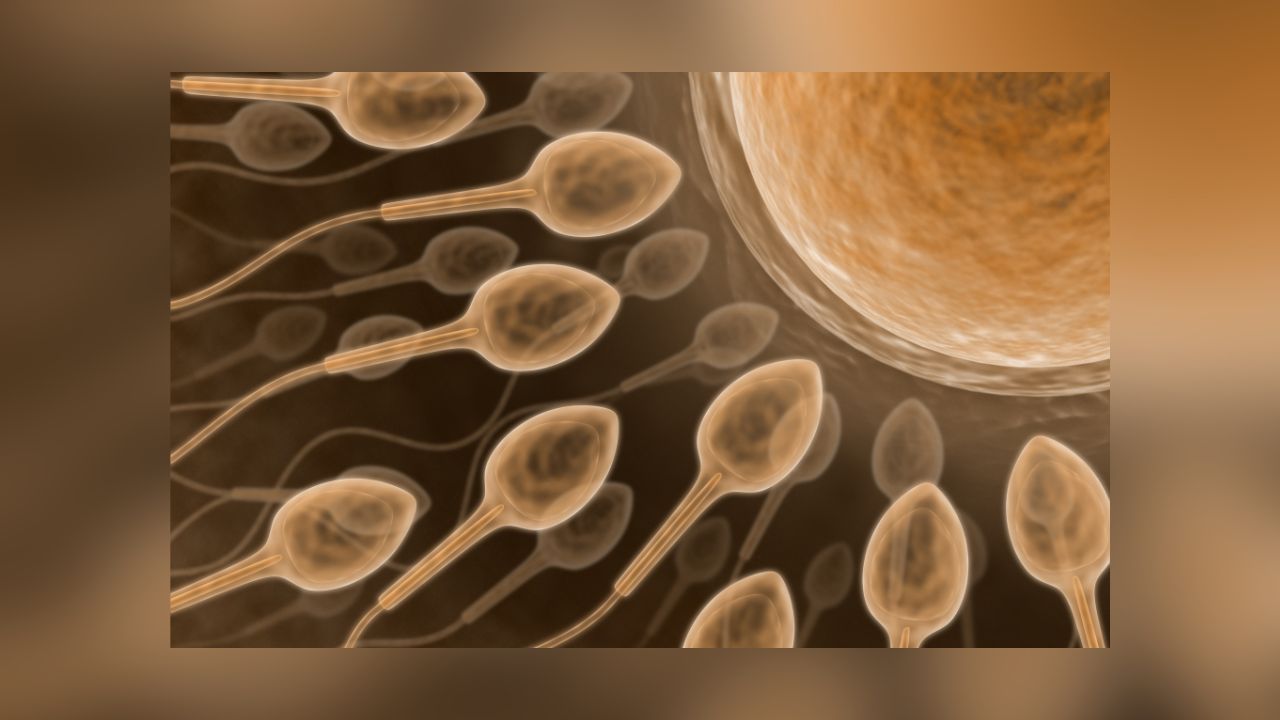
McPherson and researchers at the University of Adelaide studied human, mouse, and pig sperm using a device called a clinostat, which creates conditions that simulate the effects of weightlessness.
The sperm continued moving under simulated microgravity, but fewer successfully navigated through narrow channels designed to mimic portions of the female reproductive tract.
Researchers found roughly a 50% reduction in the number of human and mouse sperm that successfully completed the simulated journey compared with normal gravity. In experiments involving mouse eggs, fertilization rates fell by about 30%.
The findings suggest gravity may play a role in helping sperm determine their direction.
Researchers also found that progesterone, a hormone naturally released around ovulation, improved sperm navigation under simulated microgravity conditions.
Early Embryos Also Face Challenges
The researchers found that longer exposure to simulated microgravity created additional problems for developing embryos.
When mouse embryos were exposed to the conditions during the first 24 hours after fertilization, fewer embryos developed successfully. Those that did develop showed signs of delayed growth and had fewer cells during critical early stages.
Similar findings were observed using pig cells.
The researchers said the results indicate that challenges to reproduction in space could occur at multiple stages rather than being limited to fertilization.
Animal Studies Offer Limited Answers
Scientists have studied reproduction and development in animals sent into space for decades, including rats, quail, frogs, newts, geckos and zebrafish.
Scientists have also sent early-stage mammalian embryos into space. In 2020, China launched mouse embryos aboard the Shijian-10 satellite, where an automated system monitored their development.
The embryos progressed through early cell divisions, and some reached the blastocyst stage. However, only a small number developed into healthy blastocysts.
Researchers caution that animal studies cannot fully answer how human pregnancy and development would respond to spaceflight.
Radiation Adds Another Risk
Microgravity is only one of the challenges researchers are investigating.
Beyond Earth’s protective magnetic field, astronauts are exposed to higher levels of cosmic radiation. High-energy particles can damage cells and DNA, raising concerns about how prolonged exposure could affect developing embryos.
Researchers studying the mouse embryos flown aboard Shijian-10 found changes in DNA-related chemical patterns that resembled those seen after exposure to low levels of radiation.
Spacecraft can provide some protection through shielding, but high-energy particles can penetrate protective materials and create secondary radiation inside spacecraft.
NASA and other researchers are investigating improved radiation shielding, including water-based protection and advanced materials such as boron nitride nanotubes.
Human Pregnancy Remains A Major Unknown
Human pregnancy in space presents scientific and ethical challenges that cannot easily be addressed through experiments.
Researchers have not established how pregnancy would progress under prolonged microgravity or how a developing fetus would respond to the combined effects of weightlessness, radiation, stress, and other environmental factors.
Development after birth could also present problems. A baby developing in low gravity might adapt to an environment where the normal demands on muscles, bones, circulation, and other systems are reduced. Returning to Earth’s gravity could then create additional challenges.
For scientists such as McPherson, the research is not solely about preparing for future space settlements. Studying how gravity and mechanical forces influence sperm and embryos could also provide insights into human reproduction on Earth.
The research could eventually contribute to advances in fertility treatment, sperm-quality assessment, and agricultural reproduction.
As humans prepare for longer stays away from Earth, understanding how reproduction responds to the space environment could become an increasingly important part of planning for life beyond the planet.
Provided by Dallas Express