A recent U.S. Senate hearing examined the growing use of automated license plate readers and artificial intelligence-powered surveillance networks, with witnesses describing wrongful arrests, alleged police misuse, and security vulnerabilities involving technology operated by Flock Safety and other companies.
The Senate Judiciary Subcommittee on Crime and Counterterrorism held the hearing, titled “Always Watching: Flock’s Nationwide AI Surveillance Network,” on September 23. The hearing followed widespread debate across the country, including the DFW metroplex, over the use and oversight of Flock’s nationwide network.
Sen. Josh Hawley (R-MO) chaired the hearing. CEOs from Flock Safety, Axon Enterprise, Motorola Solutions and Verkada were invited but did not appear.
Florida Woman Describes 13 Days in Jail
Lindsey Isaacs told senators that a Flock camera scan became part of an investigation that ultimately led to her arrest in connection with a fatal crash she said she had nothing to do with.
Isaacs testified that on October 4, 2025, she spent the day with her mother in Palm Coast before driving to a store in Davenport. She said she returned home to her Palm Coast apartment around 10:25 p.m.
Hours later, Florida Highway Patrol and Marion County Sheriff’s Office deputies went to her parents’ home in Ocala looking for her. Isaacs said officers told her parents that she had been involved in a fatal crash.
When officers arrived at her Palm Coast apartment, Isaacs said she provided receipts and other information showing where she had been. Her Dodge Durango was nevertheless impounded.
Isaacs later learned that investigators had used a Flock automated license plate reader that captured her vehicle roughly two to three miles from the crash scene. She said witnesses had described a maroon Dodge Durango, while investigators were initially looking for a black one.
A warrant for Isaacs’ arrest was issued in April 2026. She surrendered and spent 13 days in jail, including time in solitary confinement and a maximum-security housing unit.
On April 28, her attorney presented photographs showing the vehicle in the impound lot without the collision damage investigators had said was present. Isaacs was released on bond the following day.
In May, prosecutors filed a No Information and declined to prosecute her. Isaacs told the committee the investigation instead resulted in charges against another individual.
“A Flock camera captured my vehicle a few miles from a terrible crash I had nothing to do with that led to 13 days in jail,” Isaacs testified.
Witnesses Raise Misuse and Security Concerns
Alasdair Whitney, legislative counsel for the Institute for Justice, told senators that modern ALPR systems can do considerably more than identify a vehicle at a particular location.
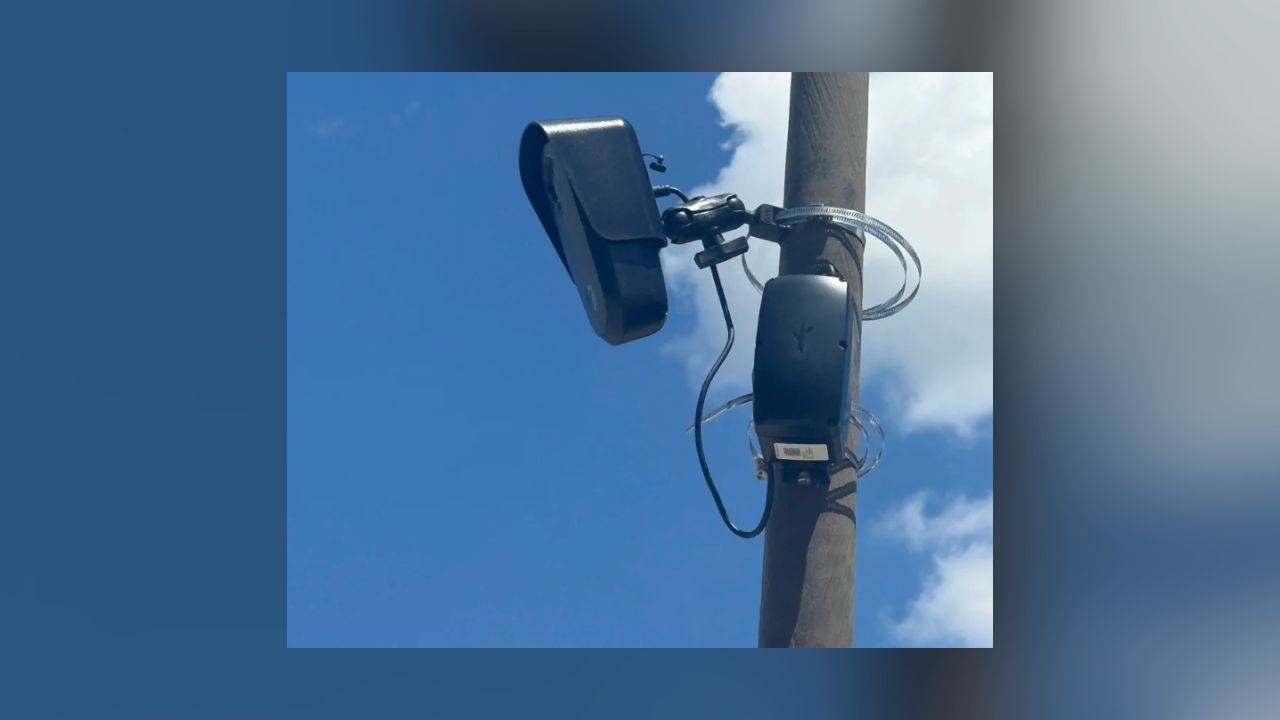
According to his testimony, Flock operates more than 120,000 cameras in 49 states and processes more than 20 billion vehicle scans each month. The system can use characteristics such as a vehicle’s make, model, and color to search for vehicles and reconstruct their movements.
Whitney argued that the technology’s ability to create detailed location histories requires stronger legal safeguards. He urged Congress to require warrants before law enforcement accesses historical vehicle-location information.
He also presented the Institute for Justice’s proposed PEEPS (Protecting Everyone from Excessive Police Surveillance) Act, which would require warrants for historical location information, impose retention limits, require access records and supervisor audits, and restrict sharing between jurisdictions.
Cybersecurity Researcher Details Vulnerabilities
Cybersecurity researcher Benn Jordan testified that he had identified security weaknesses involving Flock cameras and related systems.
Jordan said researchers had found exposed information on cameras, including photographs, license plate data, logs, API keys, passwords, and communications. He also described instances in which researchers were able to access or modify camera systems remotely.
Jordan said Flock has since invited him and other security researchers to review its hardware and platform. He told senators that stronger independent security testing should apply across the surveillance industry rather than focusing solely on one company.
ACLU Calls for Federal Privacy Rules
Chad Marlow, senior policy counsel at the American Civil Liberties Union, told senators that automated license plate readers have been used in the United States since the late 1990s, but that venture-capital funding and artificial intelligence have turned them into a nationwide tracking system. AI, he said, makes it possible to search tens of billions of scans and reconstruct where people go — including doctors’ offices, religious institutions, political events and support meetings — even when they are not suspected of a crime.
Marlow said Flock, by its own admission, collects more than 20 billion license-plate scans each month. He argued that kind of monitoring can chill lawful activity and said more than 200 localities have ended relationships with Flock in the past 18 months. The ACLU has called for federal limits on government access to historical vehicle-location data rather than leaving oversight only to vendors and local agencies.
Sheriff Calls for Limits on AI Surveillance
Ross Teeple, sheriff of Pinal County, Arizona, offered a law enforcement perspective, saying traditional license plate readers can help officers identify stolen vehicles, respond to alerts, and locate missing people.
Teeple said he ended Pinal County’s contract with Flock because he believes newer AI-powered camera networks can go beyond point-in-time plate reading and create detailed maps of people’s movements.
He told senators law enforcement should establish clear limits before technology expands further.
“If my deputies need a search warrant to put a physical tracker on a vehicle, where is the line for camera systems that build an identical, AI-driven map of a citizen’s life?” Teeple asked in his testimony.
The hearing highlighted a broader debate over how law enforcement can use increasingly powerful surveillance technology while addressing privacy, security, and constitutional concerns.
Provided by Dallas Express