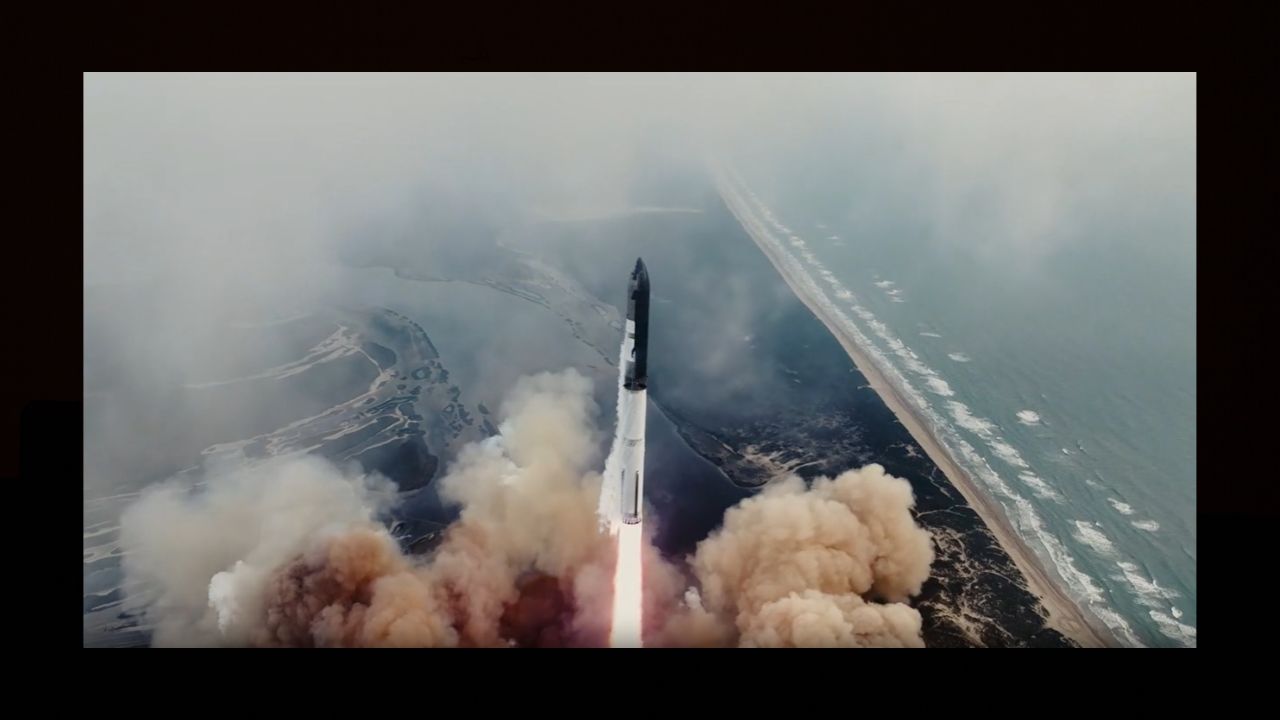
SpaceX’s Starship spacecraft reached orbit for the first time Monday after launching from South Texas, advancing the company’s satellite-launch ambitions and development of a lunar lander for NASA.
The spacecraft splashed down intact in the northern Pacific Ocean three hours and eight minutes after liftoff, then toppled over and exploded, Space.com reported.
The 407-foot rocket lifted off from Starbase on September 28 for its 14th full-scale test flight. No one was aboard.
Engine shutdown did not prevent orbit
One of Starship’s six engines shut down early during ascent. Flight controllers assessed the spacecraft before proceeding with the engine firing needed to enter orbit.
“Starship is orbital,” Mission Control announced.
The flight marked a departure from earlier tests, which followed suborbital trajectories. Starship also deployed 26 next-generation Starlink V3 satellites to expand SpaceX’s broadband internet network.
SpaceX initially planned a nearly 10-hour mission with six orbits and a Pacific splashdown near Chile. Mission controllers shortened the flight by nearly seven hours.
Reusability remains a goal
The Super Heavy booster made a controlled offshore splashdown about seven minutes after liftoff instead of returning to Starbase.
SpaceX first caught a Super Heavy booster with the launch tower’s mechanical arms in October 2024. Catching the Starship upper stage remains a future objective.
The company designed the system for full reuse to reduce launch costs. Three of the newly deployed Starlink satellites carried cameras to examine Starship’s heat shield and help engineers improve its protection during reentry.
As previously reported by The Dallas Express, heat-shield performance and reentry testing also featured in Starship’s 11th flight from Texas in October 2025.
Elon Musk has said SpaceX plans to phase out Falcon rockets once Starship can fly reliably several times a week.
NASA plans docking tests before a moon landing
NASA plans Artemis III for 2027 as a crewed demonstration in low Earth orbit. Its mission outline calls for Orion to test rendezvous and docking with test versions of one or both commercial landers under development by SpaceX and Blue Origin.
NASA currently targets early 2028 for Artemis IV, the program’s planned return of astronauts to the lunar surface. The schedule remains a target as the agency and its partners develop and test the required systems.
Provided by Dallas Express