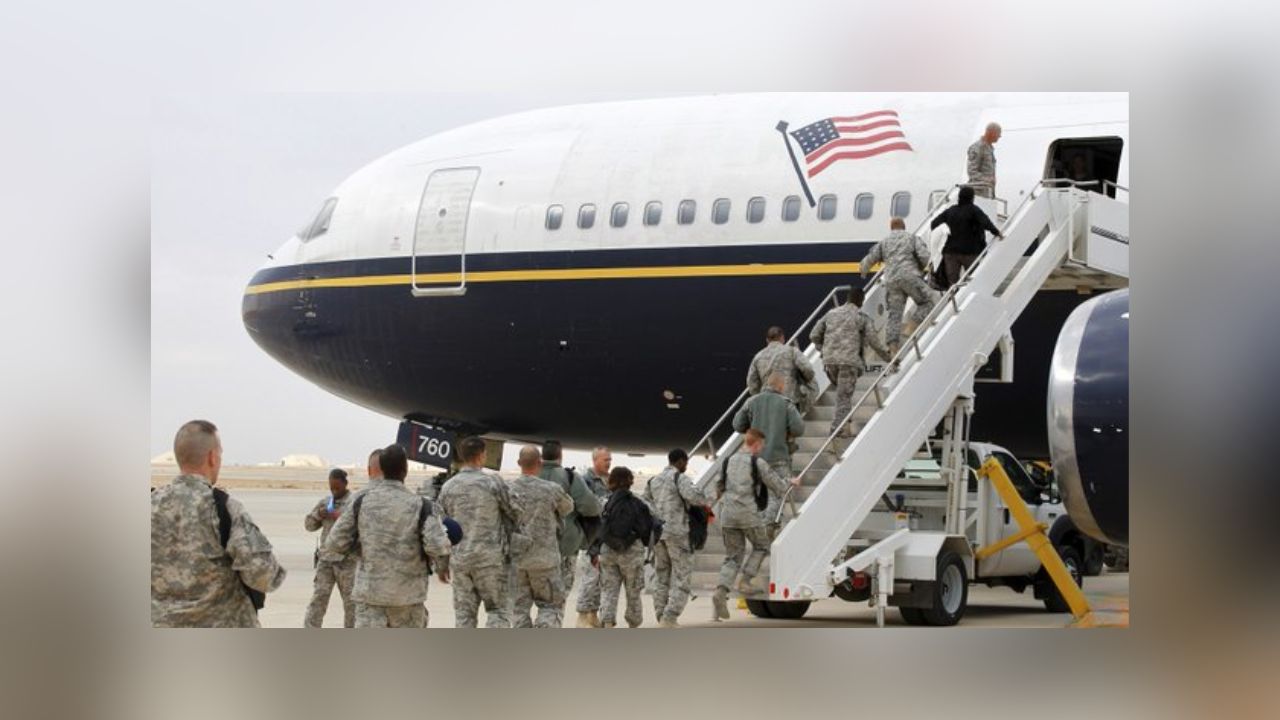
U.S. Central Command said the final departure from Erbil Air Base in northern Iraq was completed on Wednesday, September 30. The withdrawal follows a 2024 agreement between Washington and Baghdad to end the coalition’s military mission in Iraq and transition to a bilateral security relationship.
Mission Shifts to Iraqi Forces
Chief Pentagon spokesman Sean Parnell said the departure marks the transition from a wartime coalition operation to an Iraqi-led security effort.
The Pentagon said Iraqi Security Forces, including the Peshmerga and other forces in the Kurdistan region, will now have primary responsibility for addressing remaining security threats and preventing ISIS remnants from rebuilding their capabilities.
“The primary responsibility for addressing Iraq’s remaining security challenges, including ISIS remnants and Iran-aligned militias that undermine Iraqi sovereignty and regional stability, now rests with the Government of Iraq,” Parnell said.
The United States plans to maintain a security relationship with Iraq, including targeted training and intelligence support for Iraqi forces.
Counter-ISIS Operations Continue
The end of the U.S. military mission in Iraq does not mean the broader campaign against ISIS has ended.
The Combined Joint Task Force — Operation Inherent Resolve has relocated its headquarters to Jordan, while U.S. and coalition forces continue counter-ISIS operations in Syria.
CENTCOM Commander Adm. Brad Cooper said Iraqi forces now have the capacity and operational independence to manage security threats inside the country.
“Job well done to the tens of thousands of American service members, diplomats, and civilian personnel who answered the call in Iraq,” Cooper said in a statement posted on X.
Cooper said ISIS no longer poses a systemic threat to Iraq’s national security, while emphasizing that U.S. and coalition forces elsewhere in the region remain prepared to respond to threats from the group.
Iraq Faces Remaining Security Challenges
The withdrawal comes as Iraq continues to confront ISIS remnants as well as powerful Iran-aligned militias operating inside the country.
The Iraqi government has sought to bring weapons held by non-state groups under government control, although some influential militias have resisted efforts to disarm them.
The departure has produced different reactions inside Iraq. Iraqi officials have described the end of the coalition mission as an important step toward greater sovereignty, while some Kurdish officials and others have expressed concerns about the security implications of the U.S. withdrawal.
End of a 12-Year Military Mission
The U.S.-led campaign in Iraq began in 2014 after ISIS captured large portions of the country. American forces had previously withdrawn from Iraq in 2011, following the U.S.-led invasion in 2003.
Most U.S. troops involved in the Iraq mission departed during the earlier stages of the transition, leaving the final contingent in the northern Kurdish region. The completion of the Erbil withdrawal closes the Iraq portion of Operation Inherent Resolve.
Parnell said the United States remains committed to preventing ISIS from reconstituting in Iraq and supporting a sovereign Iraqi government.
“The United States supports a strong sovereign Iraq that secures its borders, protects its people, and serves as the foundation for deeper commercial, diplomatic, and security cooperation between our two countries,” Parnell said.
Provided by Dallas Express