A claim racing across X this week contains a striking factual core: Since the Trump administration began dismantling the U.S. Agency for International Development in early 2025, the political left has failed to win a completed presidential election across the Spanish- and Portuguese-speaking Latin American countries that have gone to the polls.
The results are documented.
The explanation being attached to them is not.
Donald Trump Jr. argued Monday that the streak is evidence that American foreign-aid money had been sustaining organizations that benefited the political left. Daily Wire host Matt Walsh called it a “Pretty incredible datapoint.”
Pretty incredible datapoint https://t.co/CRf0FsrZJr
— Matt Walsh (@MattWalshBlog) October 5, 2026
But while seven completed presidential contests have ended without a left-wing victory since the USAID overhaul began, election results alone cannot establish that eliminating the agency caused the shift.
Brazil could soon make the streak even more striking.
What Was Posted
An X account posting as saila wrote on October 4, “Since USAID was dismantled, the left has not won a single election in Latin America, by the way,” alongside a map of recent contests.
Public metrics displayed with the post showed more than 2.4 million views by Tuesday morning.
Trump Jr. amplified the claim October 5.
“Since we gutted USAID, the left hasn’t won a single presidential election in Latin America,” Trump Jr. wrote.
He alleged that billions in taxpayer money had funded NGOs, democracy programs and activist networks that “conveniently always backed the same side,” adding, “They called it aid but it was election interference.”
Since we gutted USAID, the left hasn’t won a single presidential election in Latin America.
Billions in taxpayer cash were funding NGOs, “democracy” programs, and activist networks that conveniently always backed the same side. They called it aid but it was election… https://t.co/jFEsYginxj— Donald Trump Jr. (@DonaldJTrumpJr) October 5, 2026
Trump Jr. thanked Elon Musk for “dragging this into the light” and concluded, “The grift is over.”
Hours later, Walsh reacted to the same claim with four words: “Pretty incredible datapoint.”
The election streak can be checked against official results. The allegation that USAID funding determined earlier elections requires evidence connecting specific U.S.-funded programs to candidates, parties or electoral outcomes.
What Happened to USAID
President Donald Trump began the foreign-aid overhaul on his first day back in office.
A January 20, 2025, executive order directed a 90-day pause on new foreign development assistance obligations and disbursements while programs were reviewed for consistency with U.S. foreign policy.
Secretary of State Marco Rubio announced in March 2025 that roughly 83% of USAID programs identified during the initial review (about 5,200 contracts) were being canceled.
The restructuring ultimately went substantially further.
The Government Accountability Office reported in GAO-26-108607 on September 30 that approximately 6,780 of USAID’s 7,510 awards active on or after January 2025 had been terminated by March 2026 (roughly 90%).
The terminated awards represented $79.1 billion in cumulative obligations, while approximately 730 active awards representing $52.1 billion remained, according to GAO.
The State Department assumed responsibility for the remaining programs after USAID stopped administering foreign-assistance awards on July 1, 2025.
USAID also undeniably financed democracy and civil-society initiatives overseas.
GAO found in GAO-26-108754 that USAID allocated approximately $9 billion for democracy assistance from fiscal years 2018 through 2023, while the State Department allocated another $5 billion.
The programs included good governance, civil society, rule of law, human rights, anti-corruption efforts, elections and political processes, and independent media.
Those figures establish that billions of U.S. taxpayer dollars supported democracy-related programs abroad.
The Election Streak
The sequence began in Ecuador.
President Daniel Noboa defeated leftist Luisa González in the April 13, 2025, runoff. Ecuador’s National Electoral Council certified Noboa with 55.63% of the vote.
Bolivia followed later that year, although its result requires an important distinction.
Rodrigo Paz won the October runoff with 54.96% of the vote, Bolivia’s Supreme Electoral Tribunal announced.
His victory ended nearly two decades in which the socialist Movement Toward Socialism had dominated Bolivian politics.
Paz, however, is more accurately described as a centrist than a right-wing politician. Bolivia therefore supports the narrower claim that the left did not win, rather than the broader claim that every election produced a right-wing winner.
In Honduras, conservative Nasry Asfura won the November 30, 2025, presidential election after a prolonged and disputed count.
The Associated Press reported that Asfura was declared the winner with 40.27% of the vote, narrowly defeating Salvador Nasralla at 39.53%.
Rixi Moncada of the governing left-wing LIBRE party finished third with 19.19%.
In Chile, conservative José Antonio Kast defeated Communist Party candidate Jeannette Jara in the December 14 runoff.
Chile’s electoral service confirmed that Kast received 58.17% of valid votes.
Costa Rica followed on February 1, 2026.
The country’s Supreme Electoral Tribunal reported that Laura Fernández received 48.53% of valid votes.
Costa Rican law requires a presidential candidate to exceed 40% of valid votes to avoid a runoff, a threshold the tribunal explained in formally declaring Fernández elected.
Her nearest rival, Álvaro Ramos of the National Liberation Party, was a centrist, not a candidate of the left. The result therefore supports the narrower claim that the left did not win rather than suggesting Fernández defeated a left-wing finalist.
In Peru, conservative Keiko Fujimori narrowly won the June presidential runoff.
Peru’s National Jury of Elections proclaimed Fujimori president-elect after she received 9,223,396 votes, compared with 9,173,755 for Juntos por el Perú candidate Roberto Sánchez — a difference of just 49,641 votes.
Later that month, Colombia became the next country in the sequence.
Right-wing lawyer Abelardo de la Espriella defeated leftist Sen. Iván Cepeda.
Reuters reported on election night that the preliminary count put De La Espriella at 49.66% and Cepeda at 48.70%.
Colombia’s National Electoral Council later formally declared the election and ordered presidential and vice-presidential credentials issued.
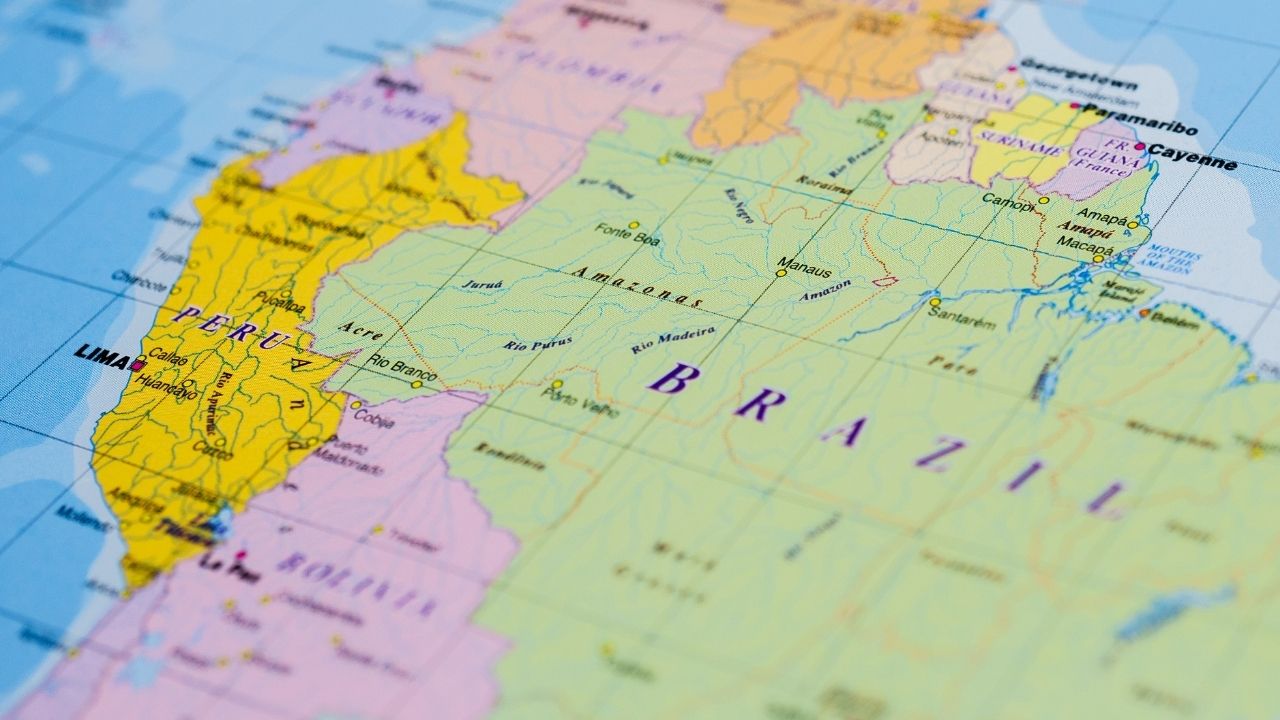
That leaves seven completed presidential contests in the region since Trump began dismantling USAID in which the political left failed to win.
Why USAID Does Not Explain Everything
Latin America’s political movement away from the left began before USAID was dismantled.
Javier Milei won Argentina’s presidency in 2023, while Noboa first won Ecuador’s presidency that same year.
Security concerns, inflation, organized crime, migration and dissatisfaction with incumbent governments were already reshaping politics across the region before Trump returned to the White House.
Bolivia poses an even more direct problem for a simple USAID explanation.
Former President Evo Morales expelled USAID from the country in 2013.
The U.S. State Department confirmed at the time that the Bolivian government had ordered the agency out.
Yet Bolivia still moved away from the socialist MAS in 2025, more than a decade after USAID was forced to leave.
To substantiate Trump Jr.’s stronger allegation would require tracing individual grants, their recipients, their activities and whether those activities improperly benefited particular candidates or political parties.
The election results do not answer those questions.
Brazil Is the Next Test
Brazil could soon extend the streak, but it has not done so yet.
Brazil’s Superior Electoral Court reported that conservative Sen. Flávio Bolsonaro received 56,104,268 votes, or 47.03%, with 99.99% of ballot boxes counted.
Leftist incumbent President Luiz Inácio Lula da Silva received 53,876,617 votes, or 45.16%.
Neither candidate secured the majority required for an outright victory.
Bolsonaro and Lula will meet in a runoff on October 25.
If Bolsonaro wins, Latin America’s largest country will extend an already striking run of presidential contests in which the left has failed to prevail.
If Lula wins, the clean version of the viral claim ends.
Provided by Dallas Express