The U.S. Department of Health and Human Services recently launched a program to provide newborn and postpartum supplies through participating care providers, building on a pilot that included Texas.
HHS announced the Newborn Essentials Support Toolkit, or NEST, program at West Virginia University Medicine Golisano Children’s Hospital in Morgantown, West Virginia. The launch marks the next phase of the agency’s Newborn Supply Kit initiative, which began in 2023.
The Health Resources and Services Administration awarded $5 million in taxpayer funding to the CDC Foundation to support implementation. HHS grant records show a September 23 award and a performance period running from September 30, 2026, through September 29, 2027.
“President Trump is putting mothers, babies, and strong families at the center of his health agenda,” HHS Secretary Robert F. Kennedy Jr. said in the department’s release.
HHS said the expansion will prioritize rural communities and areas where families face gaps in maternity care.
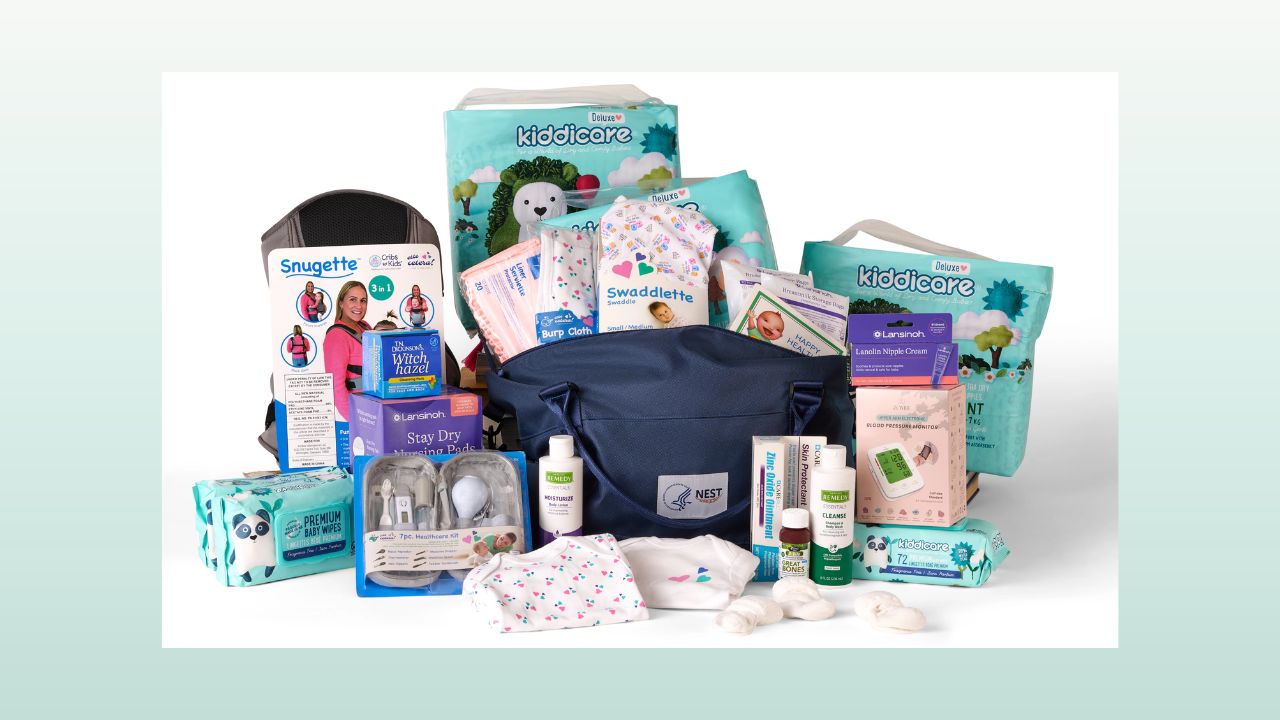
According to the agency’s program overview, each family receives a one-time kit near the time of birth. Supplies include diapers, wipes, an infant thermometer, a swaddle, and a baby carrier, along with postpartum recovery products, breastfeeding supplies, and a blood pressure monitor.
The kits also contain information about postpartum warning signs, infant care and safety, feeding, nutrition and support programs. The federal government develops and maintains the educational materials.
HHS explained that families receive kits through participating hospitals, health centers and approved local organizations. The agency does not mail kits directly to individuals or accept requests from families.
The pilot distributed 30,000 kits across 15 states, including Texas, HHS said. Baby2Baby, a nonprofit organization, partnered with the agency during that phase.
The CDC Foundation now supports private-sector participation as an implementation partner. HHS describes NEST as a public-private partnership involving government, nonprofits, businesses, and local health care organizations. The program prioritizes “areas where mothers and babies face greater barriers to care and resources,” per the HHS news release.
The HHS announcement and program overview do not identify current Dallas-Fort Worth distribution sites or specify how many kits the new phase will deliver.
Provided by Dallas Express