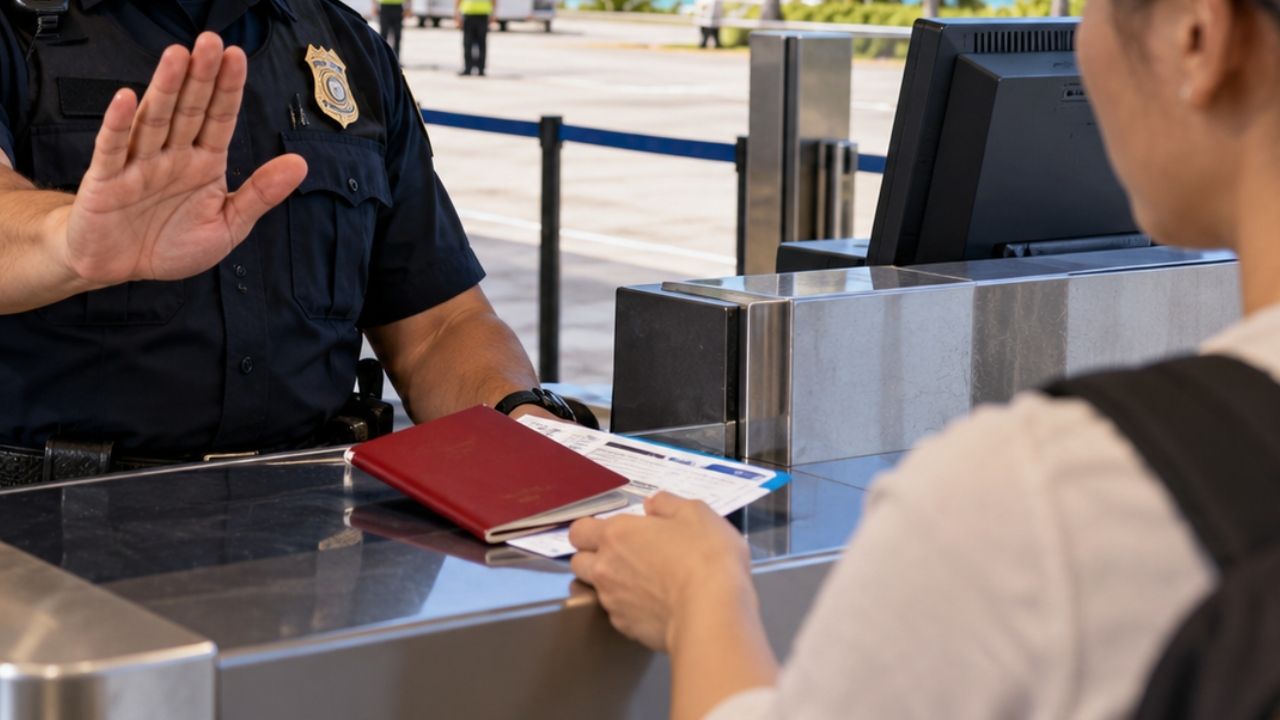
The Trump administration will suspend a special visa-free entry program for Chinese nationals traveling to the Northern Mariana Islands on Friday, following months of warnings that the U.S. territory could serve as a gateway for birth tourism and other security threats.
The Department of Homeland Security formally announced on October 27 that it will suspend the Commonwealth of the Northern Mariana Islands Economic Vitality & Security Travel Authorization Program, or EVS-TAP, effective October 30 at 1 p.m. Central.
The suspension covers new applications and existing travel authorizations, although travelers already lawfully present may finish their authorized stays.
ANCHOR BABY LOOPHOLE SUSPENDED.
Today, DHS took decisive action to protect America’s sovereignty and SUSPENDED visa-free travel for Chinese nationals to the Commonwealth of the Northern Mariana Islands.
This program made the islands a hot spot for Chinese birth tourism and… pic.twitter.com/q6VuQVErH8
— Homeland Security (@DHSgov) October 29, 2026
Chinese nationals seeking future visits must generally obtain an appropriate U.S. nonimmigrant visa. The decision does not suspend the broader Guam-CNMI visa waiver program for other eligible nationalities, and it does not prohibit Chinese citizens from applying for visas.
DX Reported On The Loophole Months Earlier
In April, The Dallas Express covered warnings from four Republican senators, including U.S. Sen. John Cornyn (R-Texas), who pressed Homeland Security Secretary Markwayne Mullin and Interior Secretary Doug Burgum to address a policy that allowed certain Chinese visitors to reach the Northern Mariana Islands without a conventional visa.
The April 22 letter focused on security risks and the prospect of birth tourism on Saipan, the commonwealth’s largest island. The issue predates EVS-TAP: the federal government had previously permitted case-by-case entry for eligible Chinese visitors under a parole policy. The Biden administration established EVS-TAP in 2024, and the new program began operating February 20, 2025, with visits generally capped at 14 days.
The Northern Mariana Islands hold a distinctive place in American immigration law. They form a U.S. commonwealth in the western Pacific, and the federal government administers a territory-specific travel framework separate from the visa waiver program for mainland travel. EVS-TAP never authorized entry to Guam or the mainland United States.
Security Concerns Extend Beyond Birth Tourism
DHS says more than 3,000 Chinese nationals entered the commonwealth through EVS-TAP during fiscal 2025. Those travelers underwent Customs and Border Protection screening rather than the State Department consular visa process.
The agency argues that the arrangement left gaps involving illegal onward travel, suspected intelligence collection, financial crime, and immigration enforcement.
The notice specifically points to U.S. military infrastructure on Tinian and neighboring Guam. Federal prosecutors confirmed a March 2024 sentence involving a Chinese national who conspired to transport nine illegal aliens from the Northern Mariana Islands to Guam. Most lacked lawful immigration status in the commonwealth, and none had authorization to enter Guam.
In another case, federal prosecutors documented a February 2025 sentence involving an illegal alien who conspired to smuggle seven other illegal aliens into Guam. Prosecutors said the group sought to evade immigration authorities and continue their unlawful presence in the United States. Authorities later encountered most of the passengers in or near sensitive military installations.
Both smuggling incidents occurred before EVS-TAP began operating in February 2025. They demonstrate risks under earlier travel arrangements, not proven wrongdoing by the more than 3,000 people who used EVS-TAP in fiscal 2025. DHS also warns that short-term visa-free travel could reduce barriers for people seeking to give birth in the territory and secure U.S. citizenship for their children. The notice does not quantify births attributable to EVS-TAP.
A Broader Crackdown With Texas Connections
The move joins other federal and state actions against suspected birth-tourism operations.
The Dallas Express previously examined a State Department task force that announced more than 600 visa revocations in August. In Texas, Attorney General Ken Paxton pursued a Houston-area center accused of facilitating Chinese birth tourism; the center later agreed to cease operations under a proposed court judgment.
The policy change affects how visitors enter the country, not the citizenship status of children born on U.S. soil. The Supreme Court’s June 30 birthright-citizenship ruling, previously covered by DX, remains a separate constitutional issue.
DHS acknowledges that the suspension may disrupt tourism-dependent businesses and travelers who relied on the program. However, the department determined that the security and law-enforcement concerns outweigh those economic consequences while federal agencies reassess the arrangement.
Provided by Dallas Express