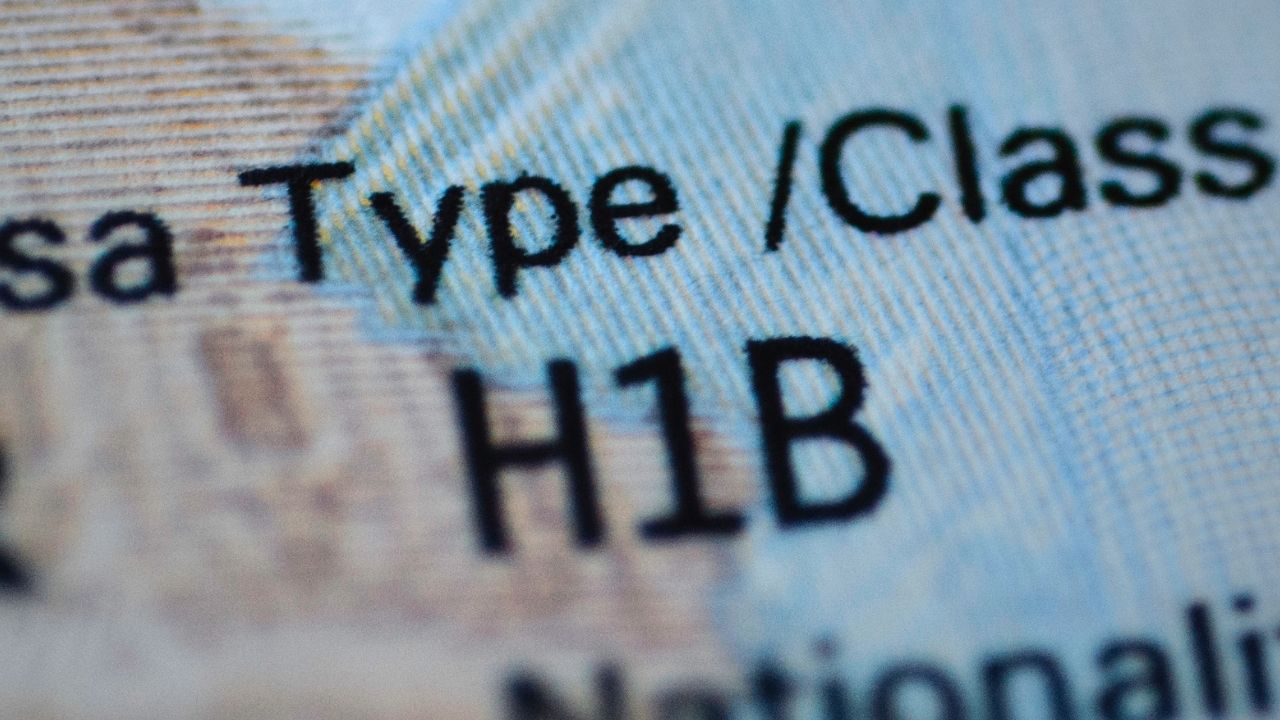
The Trump administration is approaching a November 10 deadline for public comments on a proposal that would eliminate the up-to-60-day grace period currently available to certain foreign workers after their employment ends.
The Department of Homeland Security published the proposal on September 11. Its economic analysis estimates that roughly 3,795 people annually have a new employer petition submitted during the existing grace period, including about 3,765 H-1B workers. The proposal is not a final rule, and the current provision remains in effect.
How The 60-Day Rule Works
Under the existing regulation, certain foreign workers whose employment ends may be treated as maintaining their immigration status for up to 60 consecutive days, or until their existing authorized period expires, whichever comes first. The period is discretionary and is not a guarantee of 60 additional days for every worker.
The provision, adopted in 2016 and effective January 17, 2017, was designed to improve job portability and allow qualifying employees time to pursue a new employer, a change of status, or departure. DHS now proposes to remove the regulation at 8 CFR 214.1(l)(2), according to the Federal Register.
The affected classifications are E-1, E-2, E-3, H-1B, H-1B1, L-1, O-1, and TN, along with qualifying dependents. Eliminating the grace period would not itself abolish these visa programs or cancel every existing employment authorization.
A separate provision under 8 CFR 214.1(l)(1) allows qualifying workers up to 10 days before and after an authorized validity period. The proposal does not remove those periods, which do not provide an extra 10 days when employment ends before the approved validity period expires.
The Government’s New Cost Estimates
DHS based its estimate on federal petition data.
The 3,795 figure represents an estimated annual number of workers for whom a new petitioner submits Form I-129 during the grace period; it is not a count of all foreign workers who lose jobs. The agency cautions that its records cannot distinguish between voluntary departures and involuntary terminations in the underlying withdrawal data.
About 99.2% of the estimated group—approximately 3,765 people—are H-1B workers.
For a subset of workers whose earlier petitions were revoked and who received new petitions during the grace period in fiscal year 2025, DHS calculated median annual petition wages of $131,000. These are offered wages reported in petitions, not necessarily verified earnings after hiring, according to the analysis.
DHS modeled an upper-bound example in which a worker who otherwise could have worked for two additional months instead loses that compensation while searching and traveling. Using the $131,000 annual figure, the agency calculated approximately $21,877 in potentially forgone wages. This is an illustrative scenario.
For context, the agency separately cited its fiscal year 2024 H-1B report, which listed median compensation of $97,000 for approved initial-employment beneficiaries and $132,000 for approved continuing-employment beneficiaries.
Why DHS Wants To Remove The Protection
DHS argues that the existing grace period separates immigration status from the employment or activity on which admission was based. The department says removal would restore a closer relationship between the two and reduce the administrative burden of determining grace-period eligibility.
The agency also considered retaining a shorter grace period and other alternatives. Its rulemaking explanation states that shortening the window would still require officers to determine eligibility and would not fully achieve the stated objectives.
What The Proposal Means For Texas
Texas employers, contractors, and public institutions use the H-1B program, making the proposed change relevant beyond the technology industry. It would apply nationally to workers in the affected visa classes.
A previous The Dallas Express reported that Dallas Independent School District records showed approximately $2.54 million spent on H-1B-related legal services between 2020 and September 2025, covering 599 fee-related transactions.
What Would Remain Available?
The proposal does not repeal the H-1B portability statute.
DHS notes that eligible H-1B workers may begin new employment when a qualifying, nonfrivolous petition is properly filed, without waiting for approval. Other affected visa classifications have different employer-change rules. Whether an individual may remain in the country would depend on the applicable immigration requirements and circumstances.
DHS acknowledges potential lost wages, return-travel costs, and temporary employer productivity losses. It also says employers may choose to recruit U.S. workers or complete the required petition process for another qualifying foreign worker.
November 10: What Happens Next?
The public comment period for docket USCIS-2026-0364 closes November 10, 2026. Electronic comments must be submitted before midnight Eastern Time at the end of that date through the federal rulemaking portal.
DHS must consider the rulemaking record before deciding whether to issue a final rule, revise the proposal, or take another permissible action. The agency has not established an implementation date. For now, the discretionary up-to-60-day grace period remains available under existing regulations.
Provided by Dallas Express