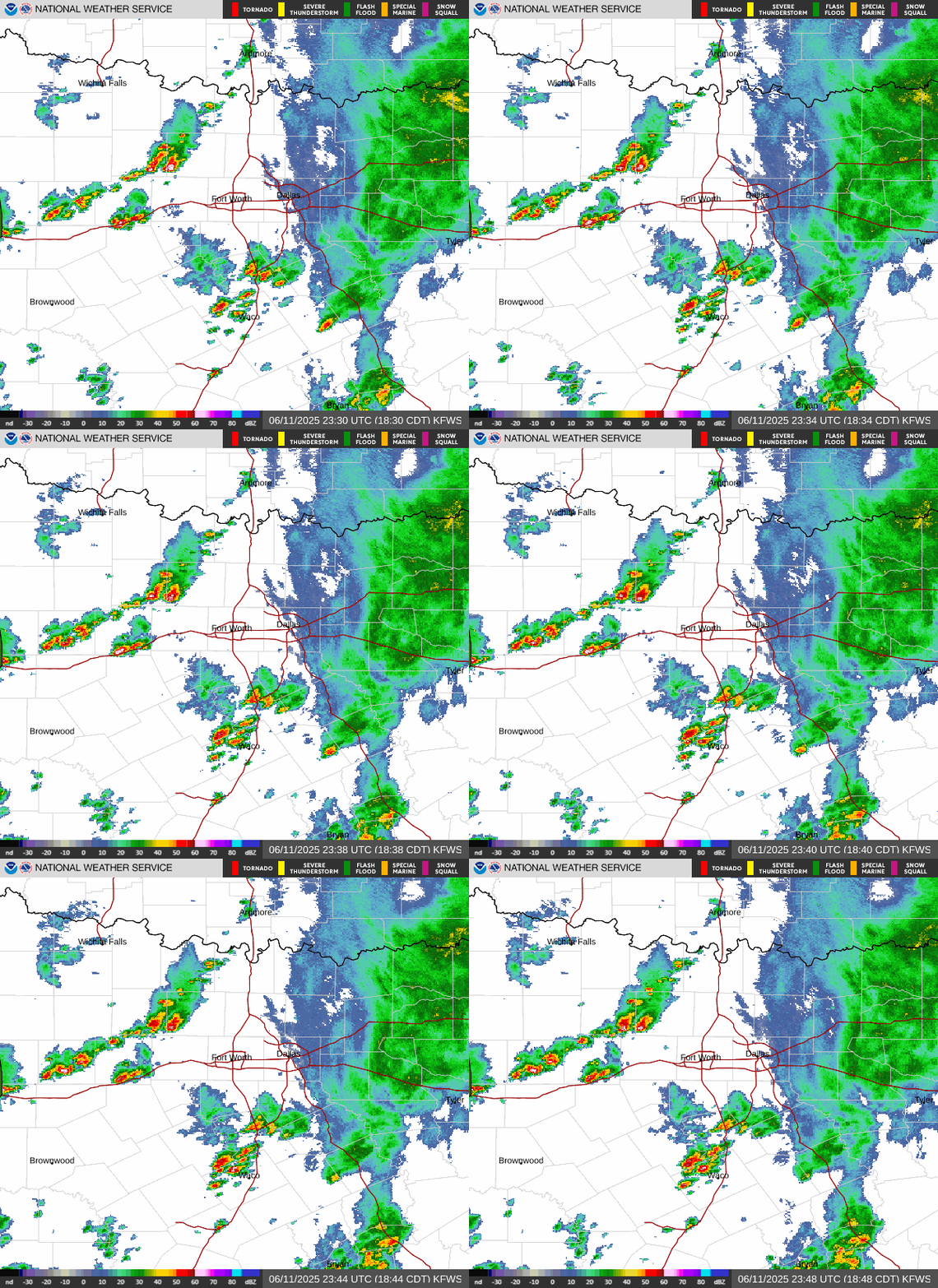
PALO PINTO COUNTY, Texas — A wildfire that broke out Monday along Highway 180 near R.D. Bell Road in Palo Pinto County, known as “Ross Fire,” has grown to 80,000 acres with 12% containment as of 5:45 a.m. Tuesday, according to the Texas A&M Forest Service.
Highway 180 and Highway 254 are closed near the scene as crews battled the flames. Officials said spot fires are popping up about a mile north of the fire.
Palo Pinto ESD 1 said the fire grew to over 18,000 acres in just 12 hours, and by 6:30 a.m. Tuesday, had grown to over 50,000 acres. Additional air assets arrived on scene Tuesday morning to assist the over 100 firefighters already on the scene to battle the blaze. However, by Wednesday morning, the fire had grown to 80,00 acres, officials said.
At least five structures are known to have been destroyed by the Ross Fire. Officials said additional damage assessments are expected to be conducted Tuesday. A beloved scout camp was destroyed by flames on Tuesday, WFAA reported.
Firefighters have been working around the clock to protect structures from the raging fire, Danny Watkins, chief of the Palo Pinto County Emergency Services District, said in a video posted to Facebook.
“The primary objective for the day is structural protection because of the fire conditions and the fuel load; we’re going to engage where we can, but the homes are the first priority,” Watkins said. “The fuel load and the weather conditions, it’s kind of been the perfect storm where we just haven’t been able to contain it. We’re doing everything we can; we’re throwing everything at this and still having minimal effect.”
The city of Graford is on high alert due to the fire, according to Palo Pinto officials. Graford ISD and Perrin-Whitt CISD have canceled school due to the fire, officials said.
Several roads are closed in the area, according to Palo Pinto officials:
- FM 4 North at the county line
- Highway 337 northbound at Highway 254
- Highway 254 westbound at Highway 337
- Highway 254 eastbound at Highway 16
- Highway 337 at Grassy Ridge Road
- Highway 337 at West Division
- Highway 337 at Dye Road
The latest updates on evacuations for Palo Pinto and Jack County can be found online here.
Palo Pinto officials have requested additional resources from outside the county and state resources as they continue fighting the fire.
Jack County fire response
Further north, a mandatory evacuation was issued for southern Jack County on Tuesday morning, according to Jack County emergency management officials, due to another wildfire spreading southeast of Highway 4 and FM 2210, heading north and east. The mandatory evacuation expired later Tuesday morning.
Residents were asked to leave the area and travel east on Farm to Market 2210, according to a Jack County Emergency Management social media post. As of 10:30 a.m., residents are still being asked to stay away from the area of Halsell Ranch Road and FM4 at FM2210.
Throughout the day, additional evacuations were ordered due to spot fires in the area.
“Be in prayer that the wind will not get too active and the fire activity stays at a minimum,” Jack County Emergency Management said in a social media post. “There is still a lot of smoke in the area and crews are still working to take care of hotspots.”
A shelter is being made available at Twin Lakes Activity Center in Jacksboro off Highway 59, according to Jack County officials.
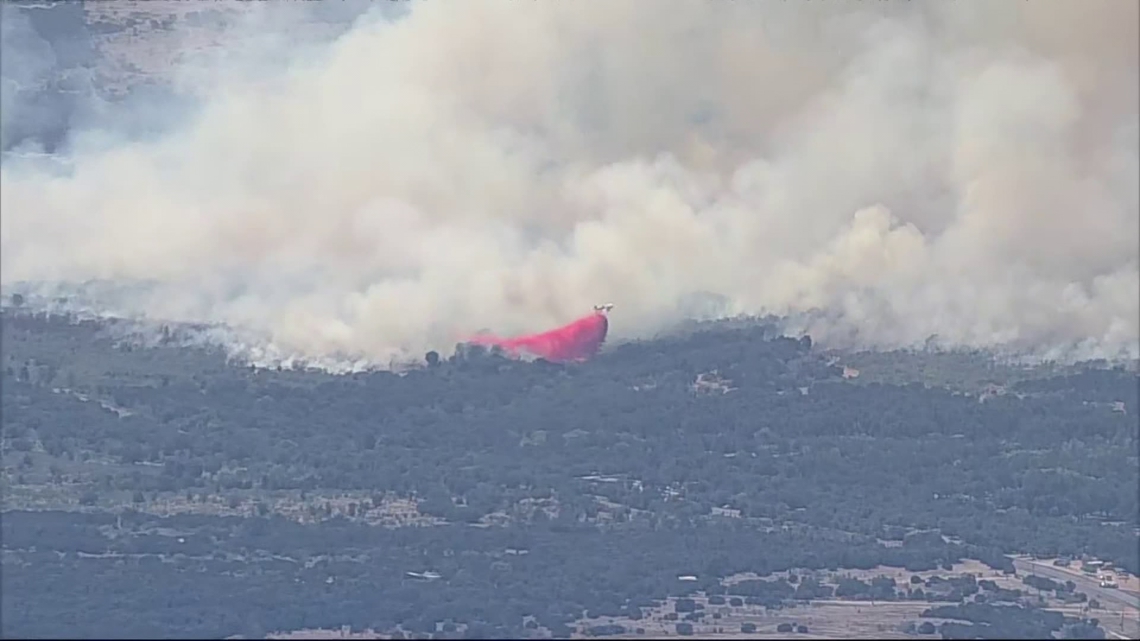
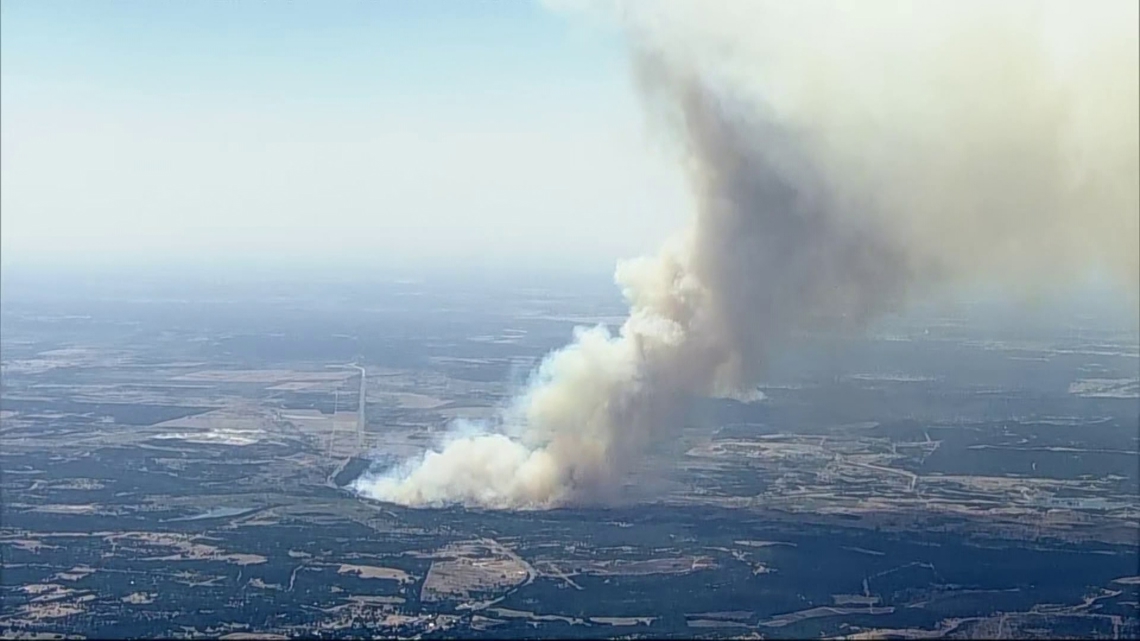
No injuries have been reported, according to officials. However, five structures are known to have been burning, with additional damage assessments to be done today.
Click here to look at the Texas A&M Forest Service Incident Viewer, tracking fires across the state.
State response
Tuesday, Gov. Greg Abbott said that FEMA approved a Fire Management Assistance Grant for the Ross Fire.
Texas will provide all necessary resources to protect Texans from the Ross Fire in Palo Pinto and Jack Counties,” Gov. Abbott said in a statement.
The approval for the grant will help support local wildfire response efforts in Palo Pinto County, Jack County, and across the state. Support includes additional medics, ambulances, all-terrain vehicles, and additional aircraft to support response needs.